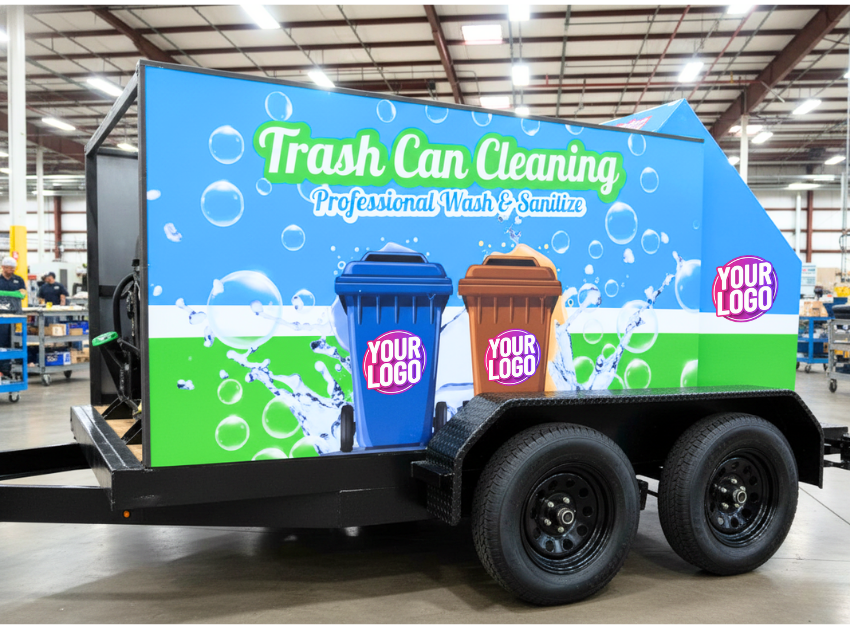
A trash bin cleaning trailer brings the washing equipment, water supply, bin-handling system, and wastewater collection together on a towable platform. Understanding the complete workflow helps you compare equipment and plan a route realistically.
This guide explains the process and the main choices. For a visual walkthrough, see how the cleaning system works. Follow the instructions supplied with your actual configuration when operating it.
How a Bin Cleaning Trailer Works: Step by Step
1. Prepare the Site and Equipment
Confirm safe access and a suitable operating position. Complete the required trailer, lift, hose, and water-supply checks. Plan where interior wash water and exterior runoff will go before cleaning begins.
2. Position the Bin and Operate the Lift
Check that the bin fits the equipment’s operating limits. The Bin Trailer uses a manual Smart Lift; it is not an electric or automated hydraulic lift. Follow the loading, retention, and operating sequence for your equipment and keep clear of moving parts.
3. Wash the Interior
The pump supplies pressurized water to a rotating cleaning head inside the bin. Pressure, flow, spray coverage, soil condition, and wash time all affect the result. The 360° SpinCore system is part of the standard model configurations.
A short interior spray cycle does not represent the entire customer stop. Inspect the cleaning result and account for exterior rinsing, handling, and cleanup when planning your work.
4. Handle Exterior Cleaning and Collected Water
Use the appropriate exterior-cleaning procedure and manage runoff that falls outside the collection area. Monitor wastewater capacity and follow an accepted disposal arrangement. A collection tank does not establish permission to discharge at any location.
5. Return the Bin and Prepare for Transport
Follow the unloading and shutdown instructions. Secure the lift, hoses, tools, and other equipment before moving. Account for the combined load of freshwater, collected wastewater, equipment, and tools within the ratings of the trailer and tow vehicle.
What Changes Between Cold and Hot Water?
Cold-water equipment uses the supply-water temperature. A heated system adds a burner and associated fuel and servicing requirements. Heat can help loosen greasy residue, but the result depends on the complete process and actual working conditions.
Cleaning is not the same as a validated disinfection process. Neither high pressure nor a heater alone establishes a bacteria-kill rate. The CDC explains the distinction between cleaning and disinfection; that general guidance is not a certification of this equipment.
Read the hot vs cold water comparison for operating costs and selection questions. Customer category alone does not determine which system is appropriate.
The Standard Single Cold and Double Hot Models
| Feature | Single Cold | Double Hot |
|---|---|---|
| Base equipment price | $29,999 | $45,999 |
| Platform | Single axle | Tandem axle |
| Water heating | Cold water | Hot and cold water with Beckett burner |
| Lift | Manual Smart Lift | Manual Smart Lift |
| Freshwater tank | 275 gallons | 275 gallons; optional 330-gallon upgrade |
| Custom wrap | Included | Included |
Checked against the model catalog on September 20, 2026. Base prices exclude shipping, applicable taxes, documentation fees, and options. Double Hot cleans one bin at a time. California editions have separate configurations. Confirm your final specifications and production timing in writing.
How Many Bins Can You Clean on a Route?
There is no single number that applies to every route. Measure total stop time, travel, soil condition, exterior cleaning, refills, disposal, and breaks. Tank volume alone does not establish a permitted water load or the number of bins between refills.
Use our capacity and route-water guide to separate tank volume, transport limits, and measured consumption.
Plan Equipment Ownership Alongside the Business
Review the equipment pricing breakdown, maintenance guide, and wastewater planning guide. Financing is available for qualified buyers, subject to lender approval and terms.
If you are preparing to launch, the business startup checklist connects equipment selection with pricing and route planning.
See Which Configuration Fits Your Work
Review the models and discuss your intended bins, service area, and tow vehicle with our team.
Compare Single Cold and Double Hot