Starting a bin cleaning business takes more than buying a trailer. You need a service people will pay for, suitable equipment, a workable route, and a budget that includes the time and cost of delivering the work.
Use this guide as a launch checklist. Build your plan around local demand and documented equipment requirements rather than a guaranteed customer count or payback period.
1. Define the Work and Research Demand
Choose the bins and service area you intend to cover. Speak with prospective customers, review local competitors, and compare service frequency and included work. Separate an expression of interest from a paying customer.
Start with a manageable area and consider trash collection days, access, travel time, water supply, and accepted wastewater disposal arrangements. A scattered customer base can add costs even when the number of bookings looks encouraging.
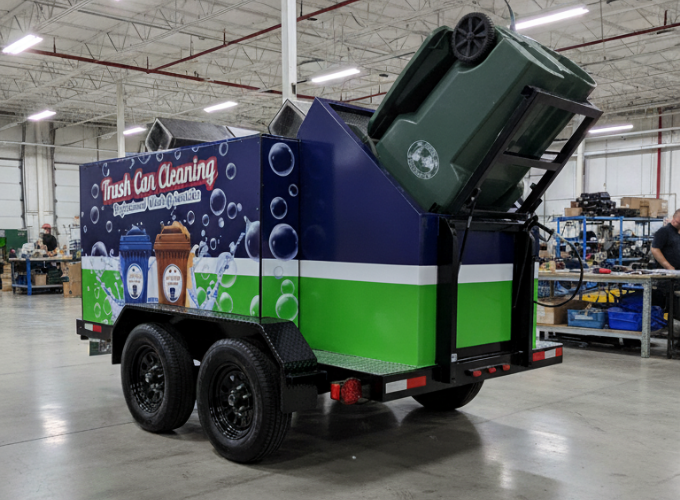
2. Select a Complete Equipment Configuration
Review the pressure-washing system, cleaning head, lift, freshwater supply, wastewater collection, trailer ratings, and maintenance access together. Confirm the bins the lift and wash area accommodate. Do not assume that a setup for wheeled bins handles dumpsters.
| Standard model | Base price | Configuration |
|---|---|---|
| Single Cold | $29,999 | Cold water, single axle, manual Smart Lift. |
| Double Hot | $45,999 | Hot and cold water, tandem axle, manual Smart Lift; one bin at a time. |
Both include a custom wrap. Shipping, applicable taxes, documentation fees, and optional upgrades are additional. The standard Double Hot offers an optional 330-gallon tank upgrade. California editions have separate configurations. Confirm current equipment and prices in the model catalog and your written quote.
The Smart Lift is manual, not an electric or automated hydraulic lift. Tank volume does not establish a permitted towing load or guaranteed number of bins per route.
3. Build Equipment, Launch, and Operating Budgets
List the full equipment purchase and delivery cost first. Then estimate registration, insurance, suitable towing equipment, storage, booking and billing tools, and initial marketing for your location.
Your operating budget should include labor, fuel, water, disposal, maintenance, consumables, payment fees, software, marketing, and financing obligations. Keep working capital for a slower launch or downtime. Read the small-business equipment budget guide.
4. Confirm Business and Wastewater Requirements
Check the applicable business registration, licensing, vehicle, insurance, and wastewater requirements with the relevant local offices and providers. Do not assume a generic permit list or fee applies everywhere.
Establish a receiving location that accepts your wash water before the first route. Plan for exterior runoff as well as water collected by the trailer. Use our wastewater planning guide to prepare your questions.
5. Set Prices and Customer Terms
Define the bin count, service frequency, included cleaning, booking process, cancellation terms, and handling of inaccessible or unusually dirty bins. Compare local offers and calculate your own cost of service. The service pricing guide explains the distinction between gross revenue and profit.
6. Prepare the First Route
Confirm production timing in your agreement, then use the preparation period to arrange insurance, scheduling, branding, and customer communication. Review the equipment instructions and complete the required pre-trip checks before operating.
Measure full stop time, water use, refill and disposal time, travel, and customer feedback. Interior washing time alone is not a complete estimate of route capacity.
7. Grow From Measured Results
Track paid customers, retention, operating costs, and owner labor. Use those records to decide whether to expand your territory or equipment. There is no fixed time to become profitable, and a monthly revenue example is not a guarantee of take-home income.
For the next step, review our customer acquisition guide or compare franchise and independent ownership.
Plan Your Equipment Purchase
Tell us about your intended work, location, and tow vehicle. Financing is available for qualified buyers, subject to lender approval and terms.
Compare Models and Options