Before starting a bin cleaning route, establish how you will collect, transport, and dispose of wash water. A collection tank is part of the equipment; it does not automatically make every cleaning or disposal practice compliant.
Requirements depend on where you work, the wastewater produced, and the receiving facility. Use this guide to prepare questions for your local stormwater and wastewater authorities, not as a site-specific permit determination.
Keep Wash Water Out of Storm Drains
Bin washing can produce runoff containing debris, organic material, detergents, and other residues. Plan how to prevent that water from reaching streets, gutters, storm drains, or nearby waterways during both interior and exterior cleaning.
The EPA explains that municipal storm sewer systems can carry untreated discharges to local waters. See its municipal stormwater guidance. Do not assume a storm drain is an approved disposal point.
Confirm an Accepted Disposal Method Before Your First Route
Contact the wastewater utility or receiving facility that serves your operating area. Describe the cleaning activity, expected volume, chemicals, solids, and how the water will be transported. Ask whether the facility accepts this waste and what authorization, testing, screening, pretreatment, or records it requires.
A sanitary sewer connection is not blanket permission to discharge commercial wash water. EPA’s National Pretreatment Program describes the role of federal, state, and local authorities in controlling nondomestic wastewater entering municipal treatment systems.
Do not assume an RV dump station accepts bin-cleaning wastewater. Obtain explicit acceptance from the receiving operator and any required authority. If a liquid-waste contractor is needed, verify that the provider can handle your particular waste stream.
Check the Whole Collection Workflow
- Interior washing: understand what the wash area captures and how it drains.
- Exterior rinsing: plan for runoff outside the collection area rather than assuming the trailer captures it.
- Storage: confirm usable collection capacity, closures, access, and the procedure for removing debris.
- Transport: include freshwater, wastewater, equipment, and tools in the approved loading plan.
- Disposal: follow the receiving facility’s approved method and retain the required records.
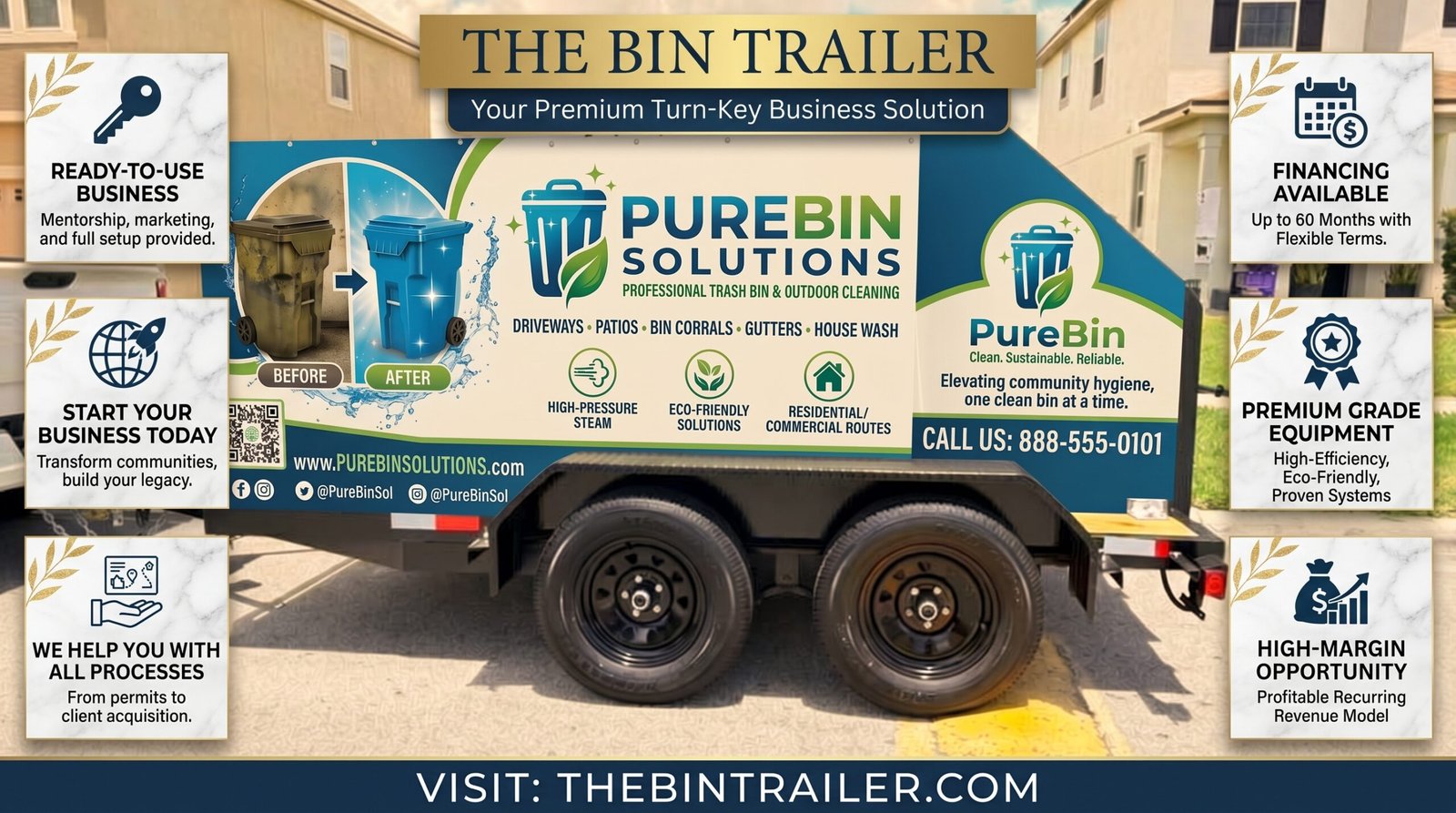
The Bin Trailer models include wastewater collection equipment. Confirm the exact configuration and operating instructions in your quote. We do not present the equipment as an EPA certification or a guarantee of compliance in every jurisdiction.
Ask the Right Local Questions
Start with your city or county stormwater office and wastewater utility. Ask about mobile washing rules, approved receiving locations, transport requirements, and any business permits that apply. For Florida operations, confirm requirements for the actual city, county, and receiving utility rather than assuming one statewide procedure covers every route.
Keep the answers with your operating records: the authority contacted, date, accepted waste type, authorized location, restrictions, and renewal requirements. Recheck when your service area or cleaning products change.
Business Setup Is a Separate Check
Business registration, insurance, vehicle requirements, and wastewater arrangements are separate tasks. Confirm each with the relevant office, insurer, or adviser. A generic online fee or insurance limit may not match your location or customer contract.
Frequently Asked Questions
Does a wastewater tank make my business fully compliant?
No. You still need an appropriate collection process, loading plan, accepted disposal arrangement, and any applicable authorizations.
Where can I dispose of collected water?
Use a facility or method that explicitly accepts your waste under the applicable conditions. Confirm before operating, not after your tank is full.
Continue with our business startup guide and equipment inspection guide.
Review Your Equipment Requirements
Discuss collection capacity, access, and the configuration you are considering with our team.
Compare Trailer Models